

Updated on March 6, 2026
Painted Silos, Victoria
The painted silo art trail is an incredible drive through the Wimmera and Mallee regions of Western Victoria. Passing through small farming communities that were not on the main tourist trail, until now. Created to generate tourism in the area, the silos are inspiring and a credit to the artists involved.
Covering over 200 km, the trail can be done in a day from Horsham quite easily, and there are some low-cost campsites and country towns to visit along the way. Most towns offer hotel accommodation.
A self-drive tour discovering Western Victoria, including the Silo Art Trail, is well worth adding to a road trip ideas list.
Rental cars and motor homes – Drive Now is an excellent company for comparing car hire rates across all the major rental companies and getting the best price.

This post may include affiliate links, please read our disclaimer.
Getting To The Silo Art Trail: Melbourne to Horsham
300 km | 3 hours 20 minutes
Horsham is an ideal starting point for a drive along the silo trail. It is a medium-sized country town with plenty of accommodation options.
- Horsham Mid-City Motel is a good choice, complete with an indoor heated pool.
- The Majestic Motel is a well-rated budget motel and also has an indoor pool.
- May Park Executive Apartments – ideal for people looking for more space.
- Horsham Riverside Camping & Caravan Park – Great facilities & Pet-friendly.
Start of the Silo Trail, Wimmera and Mallee Regions
From Horsham, it is a 40-minute drive (50.9 km) to the first painted silo in Rupanyup, where the Silo Trail begins.
Each country town has a story to tell; don’t rush through. Stop and become immersed in the history of the Wimmera region.
The drive from Horsham to the Rupanyup silos and all the way to the Patchewollock silos is about 236 km / 3 hours.
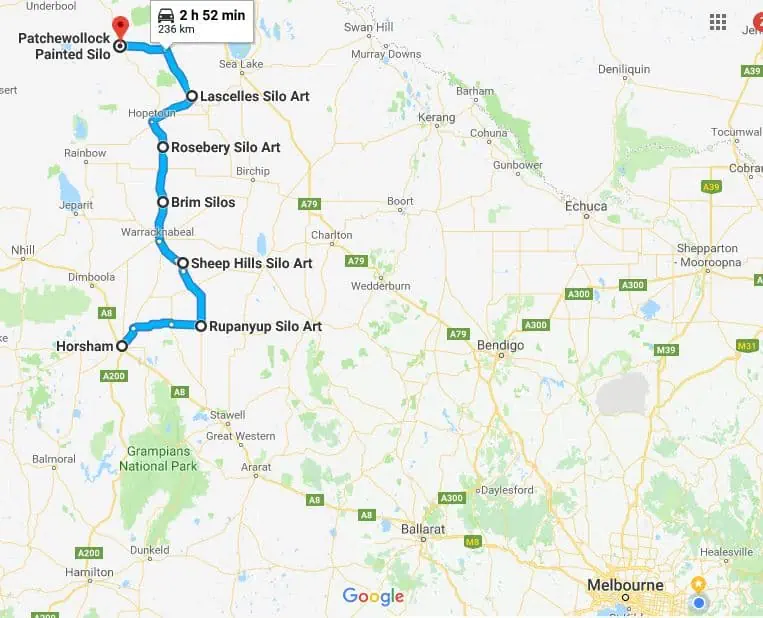
Rupanyup Silos
Horsham to Rupanyup Silos – 37 min (46.5 km)
At the southern end of the trail, Rupanyup features two local teenagers on its silos, as well as a number of murals on buildings in the town. Painted by Russian artist Julie Volchkova and assisted by Melbourne street artist Georgie Goodie, the silos were painted in 2017.

Accommodation Nearby
- The Commercial Hotel in Rupanyup is a nicely renovated old hotel with an onsite restaurant and bar.
- Minyip Caravan Park and Wetlands is a pretty spot to camp along the trail. Costing about $10 per night.
Sheep Hills Silos
Rupanyup Silos to Sheep Hills Silos – 26 min (34.7 km)
World-renowned street artist Adnate is highly regarded for his work with Aboriginal communities. He painted the Sheep Hills silos in 2016, depicting members of the Barengi Gadjin community, including local Elders Uncle Ron Marks, Aunty Regina Hood and two younger members of the community. Read more here.

Brim Silos
Sheep Hills Silos to Brim Silos – 26 min (36.5 km)
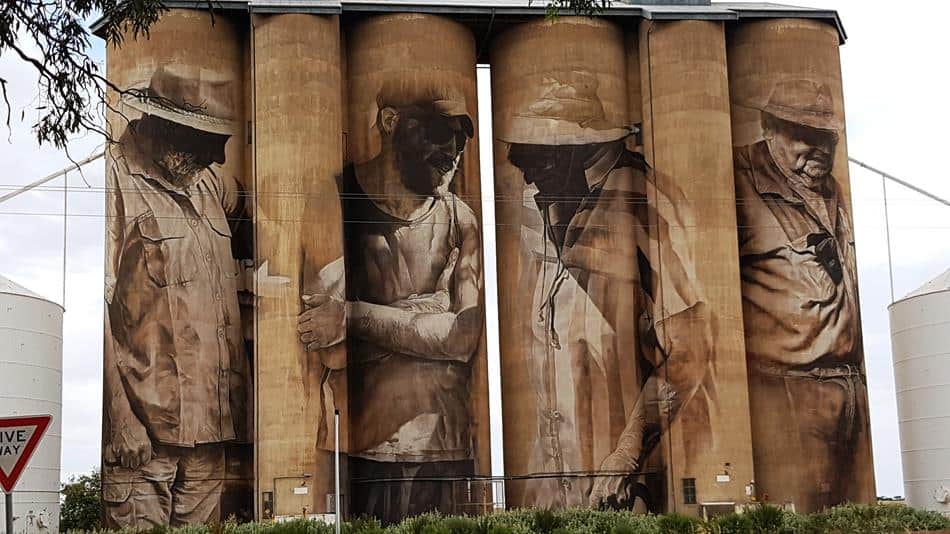
Guido van Helten’s silo artwork at Brim was the first in Victoria. Brim’s silo art inspired the Silo Art Trail.
Completed in early 2016, the mural depicts an “ anonymous, multi-generational quartet of female and male farmers”. Read more…

Nearby Accommodation
- Air BnB – A few places are available nearby to the Brim Silos or in Warracknabeal, 15 mins away.
- Brim Creek and Redda’s Park offer great camping and caravanning, with a beach area, kids’ playground, BBQs, and amenities. The basic fee of $10 for powered or unpowered sites can be paid at the local hotel or Dixon’s garage.
Rosebery Silos
Brim Silos to Rosebery Silos – 20 min (27.7 km)
Before starting the silo artwork in Rosebery, Melbourne artist Kaff-eine assisted fellow artist Rone on his Lascelles silo project. Finished in late 2017, Kaff-eine’s artwork depicts themes that she says embody the region’s past, present, and future. Read more about the Rosebery Silos here.

Lascelles Silos
Rosebery Silos to Lascelles Silos – 29 min (39.7 km)
To capture the true essence of Lascelles, Melbourne-based artist Rone knew he had to learn about the town from those deeply connected to it. Here, he depicts local farming couple Geoff and Merrilyn Horman, part of a family that has lived and farmed in the area for four generations. Read more here.

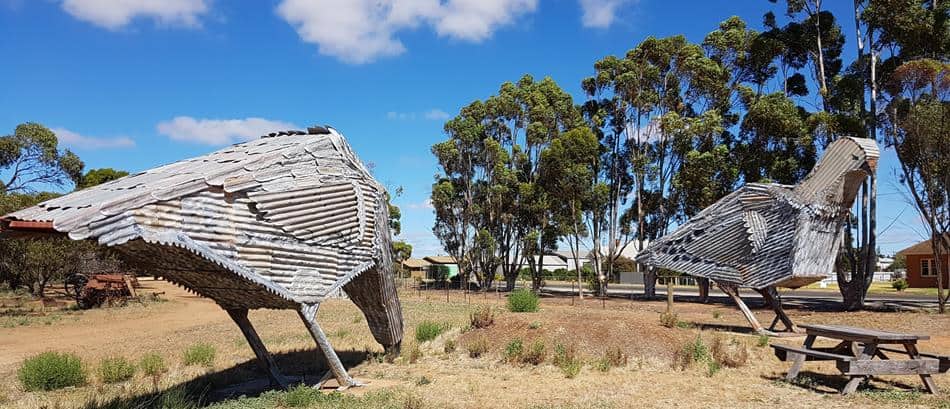
On the way to Lascelles, stop in at the gallery of tin art. A small admission charge is well worth the money to see so many imaginative pieces of art.
Nearby Accommodation
- The Lascelles Hotel is a basic country pub, browse their website here.
- The Mallee Bush Retreat is a fabulous accommodation option in Hopetoun, not too far from Lascelles and the painted silo trail. Offering unusual accommodation options, including 2 Silos, 2 Cow Sheds, Stables, 2 Machinery Sheds, and a Limestone Grain Store with 33 beds available. $15 Powered sites and free unpowered sites.
- The camping and caravan park in Lascelles is opposite the lovely old Minapre hotel (bookings and payment at the hotel). They have a couple of grassed, powered sited at about $10 per night and a number of other sites on a graveled area. Even the amenities block has been beautifully painted.

Patchewollock Silos
Lascelles Silos to Patchewollock Silos – 36 min (50.8 km)
The story behind the Patchewollock silos…
To prepare for his Patchewollock mural, Brisbane artist Fintan Magee booked a room at the local pub to immerse himself in the community and get to know its people. When he met local sheep and grain farmer Nick “Noodle” Hulland, Magee knew he had found his muse. Read more here.

Sea Lake, Drapl & The Zookeeper
Patchewollock Painted Silos to Sea Lake – 52 min (73.2 km)
“A celebration of the stillness and silence found in outback Victoria, and the associated feelings of wholeness and freedom. The young girl, swinging from a Mallee Eucalyptus, looks over Lake Tyrrell and reflects on her Indigenous heritage”. Read more…

Nearby Accommodation
- Lake Tyrell Accommodation is a top choice for staying nearby.
- Skymirror Gallery & Accommodation is the ideal place to stay if you would like a bit more luxury.
- Farmstay Glamping is a great place to stay. Campfires, big night skies…
- Camping
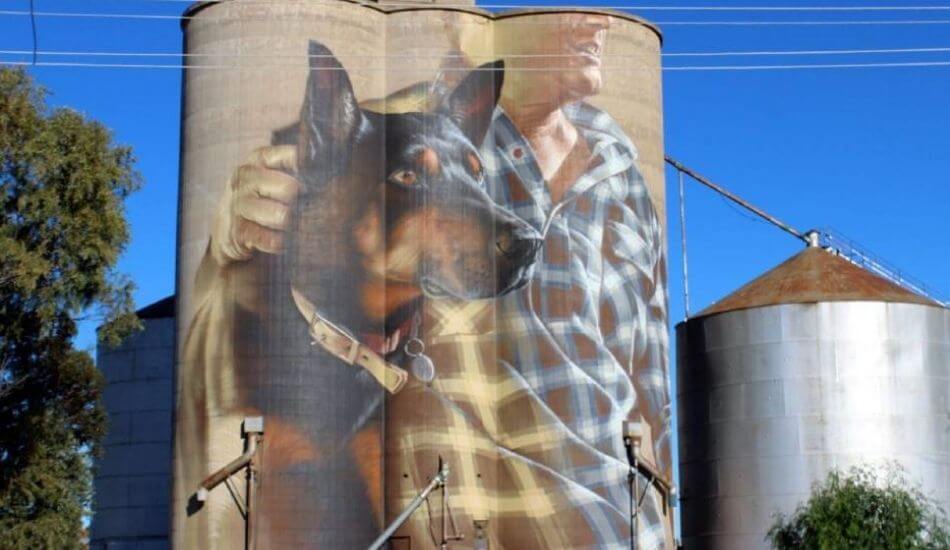
Nullawil – Smug Silo Art
Sea Lake to Nullawil Silo Art – 32 min (50.3 km)
“Community members eagerly observed the progress of the artwork, and it wasn’t long before the outline of a Kelpie sheepdog and farmer gradually emerged on the concrete canvas”. Read more…
The Stick Shed, Murtoa
The Stick Shed (previously known as the Murtoa No. 1 Grain Store) is the only remaining emergency grain store built during World War Two.
It is an enduring testament to Australian bush ingenuity and a symbol of the growth and strength of the Australian wheat industry.
The Stick Shed is the 101st Australian icon included on the National Heritage List. Completed in 1942, the unique and dramatic structure of The Stick Shed has captured the imagination of everyone who has seen its serene and evocative cathedral-like interior. Referred to by some as the ‘Cathedral of the Wimmera’.
The Murtoa Stick Shed’s ghostly unmilled tall timber poles and central aisle draw the eye upward towards the roof as light spills into the space through skylights as if through a stained-glass window.
The Stick Shed is not to be missed!
Pin for later…

very interesting. Hope to be there next month